
Choosing the right waterproofing method is a critical decision that dictates how your home will stand up to groundwater for decades to come. While both interior and exterior strategies aim to keep your basement dry, they function using entirely different mechanical principles to manage moisture.
Understanding these distinctions allows you to select the most efficient solution based on your home’s age, local soil conditions, and your long-term renovation goals. Addressing water intrusion correctly ensures that your foundation remains structurally sound while maximizing the usable square footage of your property.
The Mechanism of External Moisture Barriers
Exterior waterproofing is a preventative strategy designed to stop water from ever making contact with your foundation’s masonry. This process involves excavating the soil around the perimeter of the home to apply a seamless, waterproof membrane directly to the outer walls.
- Apply heavy-duty, polymer-modified asphalt coatings that bond to the concrete to block liquid water and vapor.
- Install dimpled drainage boards over the membrane to protect it from soil abrasion and provide a path for water to fall.
- Lay a new perimeter French drain at the footer level to collect and redirect groundwater away from the house.
By creating an impermeable envelope around the structure, you neutralize the hydrostatic pressure that often leads to bowed walls and structural cracks.
The Efficiency of Interior Drainage Systems
Interior waterproofing is a management strategy that intercepts water once it has already entered or moved beneath the foundation. This method is often preferred for existing homes because it does not require massive outdoor excavation or the removal of established landscaping and porches.
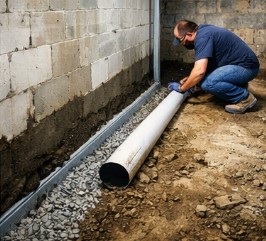
- Create an airtight drainage track along the interior perimeter of the basement floor to capture seepage.
- Use specialized wall liners to direct moisture from the foundation walls down into the sub-floor channel.
- Connect the entire system to a high-capacity sump pump that automatically discharges water safely away from the home.
This “pressure relief” approach is highly effective at managing rising water tables and preventing the floor-wall joint from leaking during heavy storms.
Impact on Landscaping and Property Aesthetics
A major difference between the two methods lies in the level of disruption to your yard and outdoor living spaces. Exterior waterproofing requires heavy machinery to dig a deep trench around your home, which inevitably impacts gardens, driveways, and sidewalks.
- Choose interior waterproofing if you have expensive hardscaping, mature trees, or attached decks that you wish to preserve.
- Opt for exterior waterproofing if you are in the middle of a new construction phase or a total landscape overhaul.
- Consider the “curb appeal” factor, as interior work is completely hidden beneath the basement floor once the project is finished.
Selecting the less invasive interior route often results in a faster project timeline and significantly lower restoration costs for your yard.
Cost Considerations and Long-Term Investment
The financial investment for waterproofing varies significantly based on the depth of the foundation and the accessibility of the site. Exterior projects generally carry a higher price tag due to the labor-intensive nature of excavation and the cost of resetting the surrounding soil and plants.
- Evaluate the long-term ROI of exterior systems, which provide the highest level of protection for the actual masonry units.
- Compare the immediate affordability of interior systems, which offer a permanent dry basement at a lower initial cost.
- Factor in the cost of replacing finished basement walls if you choose an interior system for a previously remodeled space.
Both methods add substantial value to your home, but the interior approach often provides the most immediate relief for homeowners on a fixed budget.
Addressing Foundation Type and Age
The age and material of your foundation—whether it is poured concrete, cinder block, or historic stone—can dictate which method is more effective. Older masonry foundations with deteriorating mortar often benefit from exterior sealing to prevent the blocks themselves from becoming waterlogged.
- Use exterior membranes for “porous” foundations like brick or stone to stop the material from crumbling over time.
- Utilize interior drainage for modern poured concrete foundations that are structurally sound but prone to cove-joint seepage.
- Consult with a specialist to see if a hybrid approach is necessary for homes built on expansive clay soils.
Matching the waterproofing technique to your specific foundation material ensures that the repair remains durable for the life of the building.
Secure the Structural Integrity of Your Foundation
Deciding between interior and exterior waterproofing is a strategic choice that secures the future of your most valuable asset. By neutralizing the threat of groundwater, you effectively stop the aging process of your foundation and eliminate the risk of mold growth.
The peace of mind that comes with a professionally dry basement allows you to invest in your home’s interior with total confidence. Your property deserves a customized defense system that stands up to the toughest weather conditions while preserving its structural legacy for generations.